Historiska museet
Project Field
UX Research & Exhibition Design
Project
VR & Interactive Exhibition
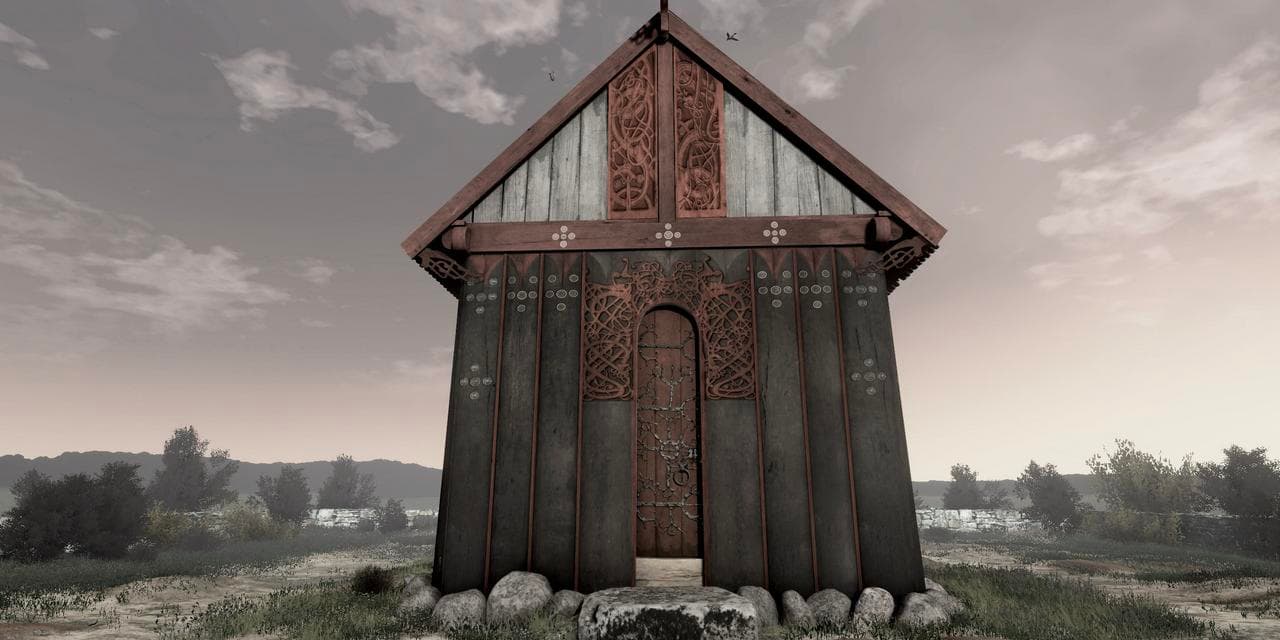
A collaboration with the Swedish History Museum to redesign two connected experiences for an exhibition on Hemse Stave Church — a 12th-century site reconstructed digitally from archaeological findings.
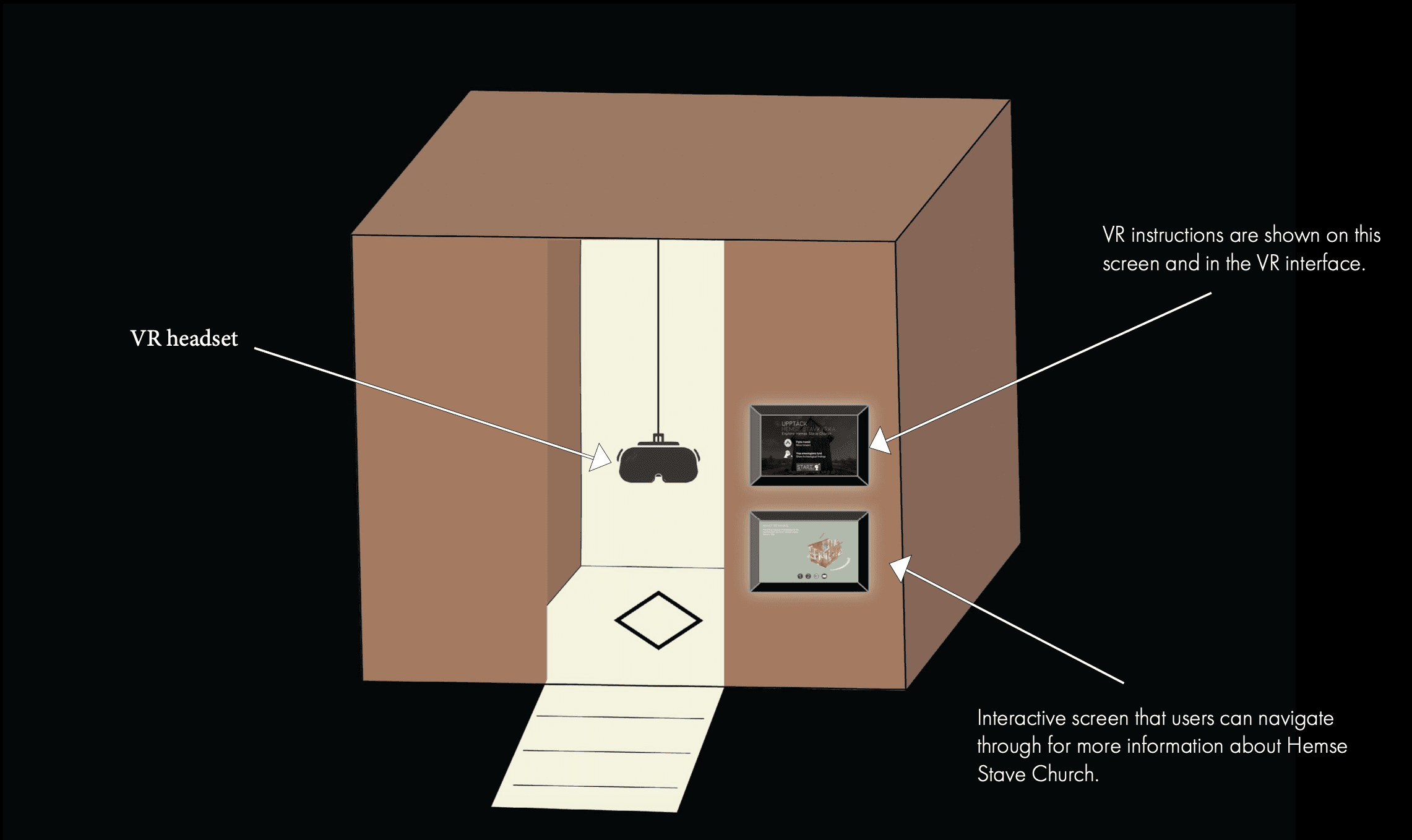
Case Study
● ● ● ● Research First
Rather than jumping to solutions, we started with observation and interviews at the exhibition. Two problems emerged clearly from the research.
For the interactive screen — visitors rarely engaged with it, and when they did, their interest dropped quickly. The content existed but wasn't pulling people in.
For the VR — navigation relied on users focusing their gaze on orange dots to move through the virtual space. Through observation we discovered this wasn't intuitive, and the absence of any onboarding meant users put on the headset with no idea how to start.
● ● ● ● The Solutions — Interactive Screen
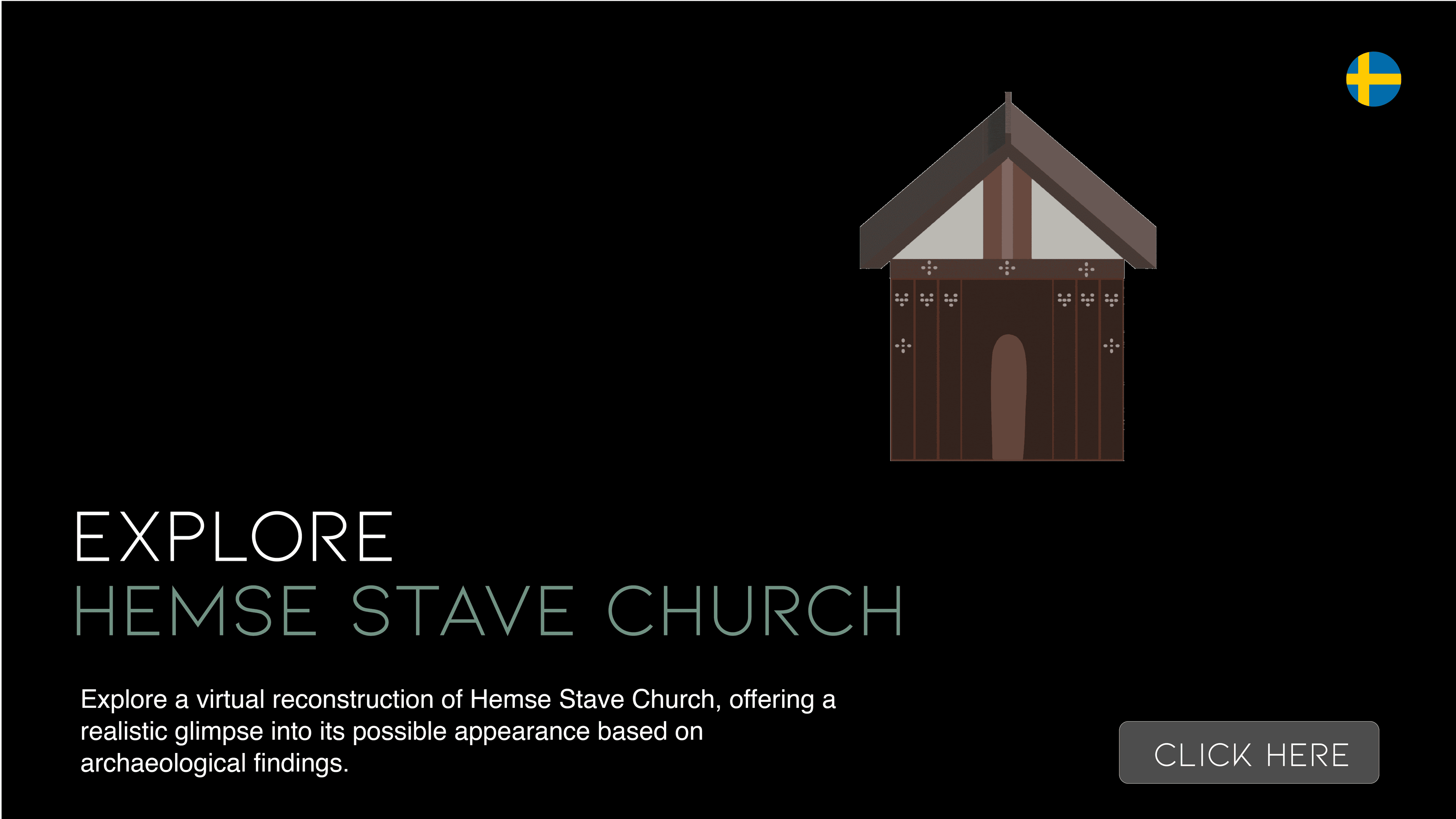
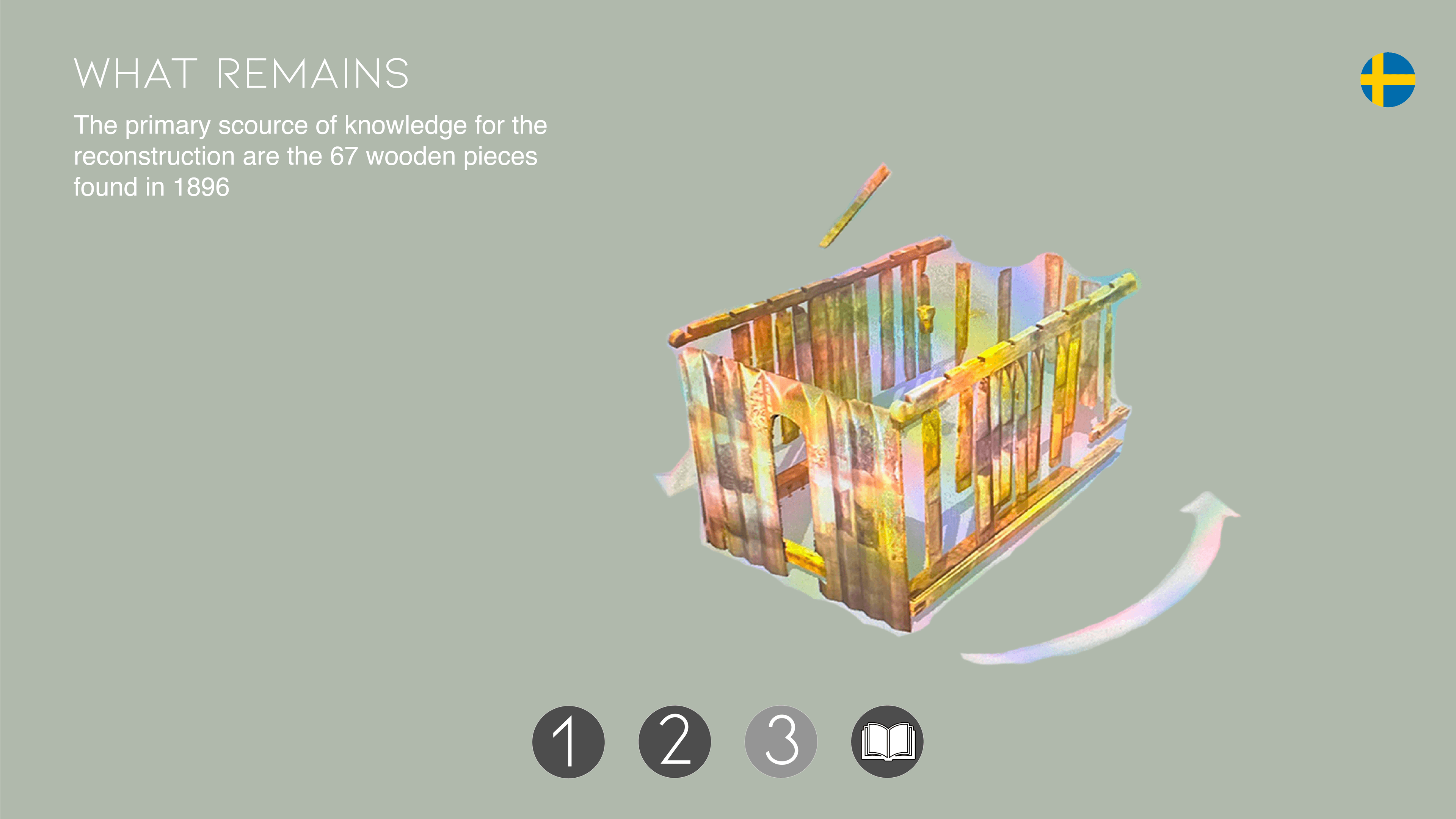
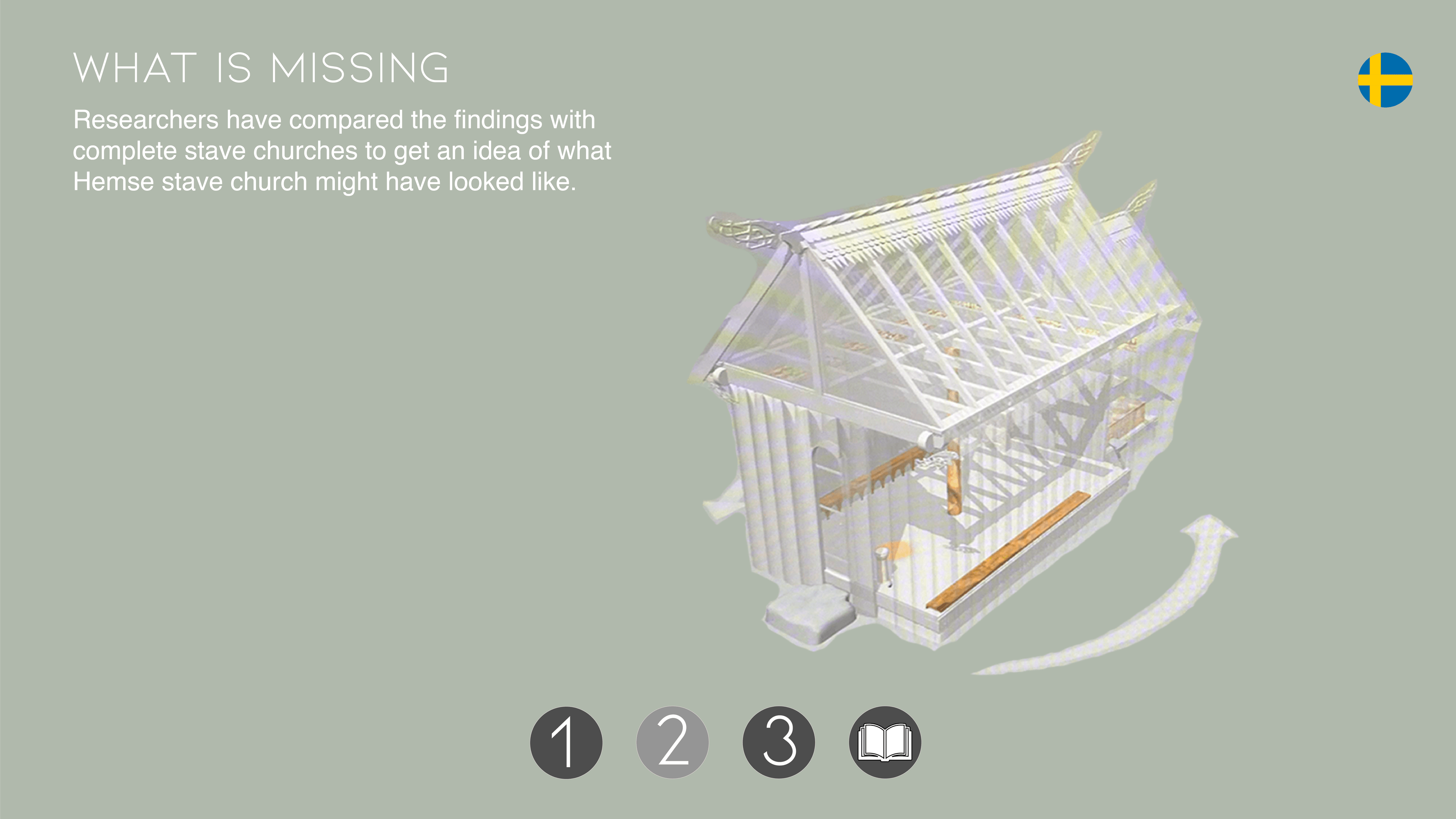
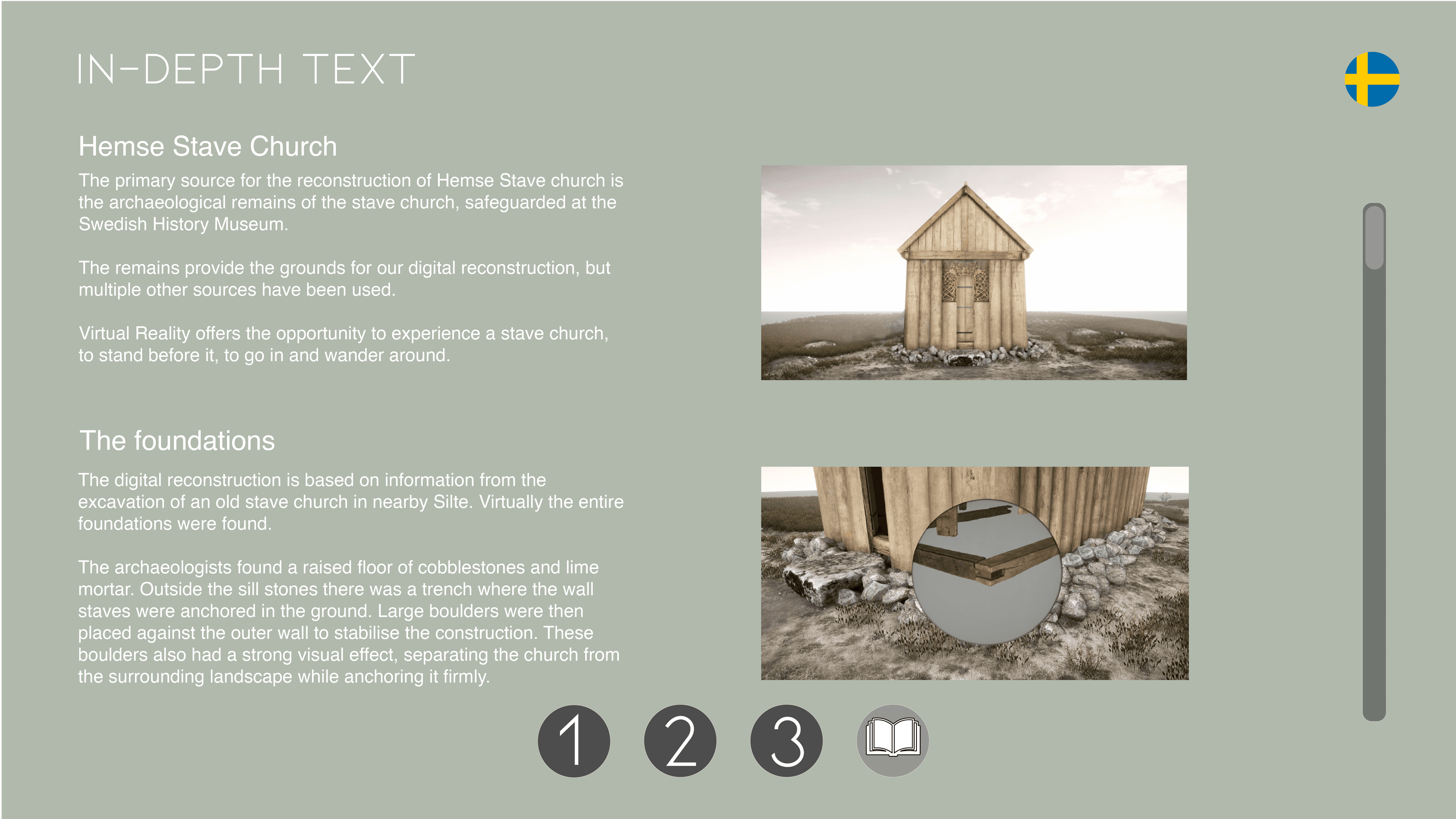
For the interactive screen we restructured the content into four distinct sections — the reconstruction itself, missing archaeological components, findings from the excavation, and historical context. A startup page was added to orient visitors before they engaged.
● ● ● ● The Solutions — VR
For the VR, targeted changes came directly from the research. Orange navigation dots were replaced with arrows — a universally understood symbol — and an instruction screen was added at the start of every session, triggered by tilting the head upward since the headset has no physical buttons. To see the changes in action, watch the video below.
● ● ● ● What This Project Shows
Both changes are small. Neither required a visual overhaul. They came entirely from watching real people struggle with the existing experience and making precise decisions based on what was observed — which is what UX research is for.
Walkthrough