Body Burden
Project Field
Product Design & Development
Project
Microplastics Exposure Calculator

Microplastics research is everywhere, but scattered across dozens of academic papers with no accessible way for regular people to understand their personal exposure. I wanted to build a tool that gathered this science in one place — not for researchers, but for anyone curious about their own habits.
Case Study
● ● ● ● The Design Challenge
The core challenge wasn't visual — it was scientific. My original concept was a single cumulative exposure score: input your habits, get a total number. Clean, simple, satisfying. It also turned out to be wrong.
● ● ● ● The Pivot
I reached out to a microplastics researcher to validate the methodology. Her response was direct.
She pushed back with two questions: what problem does the tool solve, and what problem does it create? The issue was real — studies measuring exposure from different sources use fundamentally different methodologies, so adding them into one score would look scientific without being scientific.
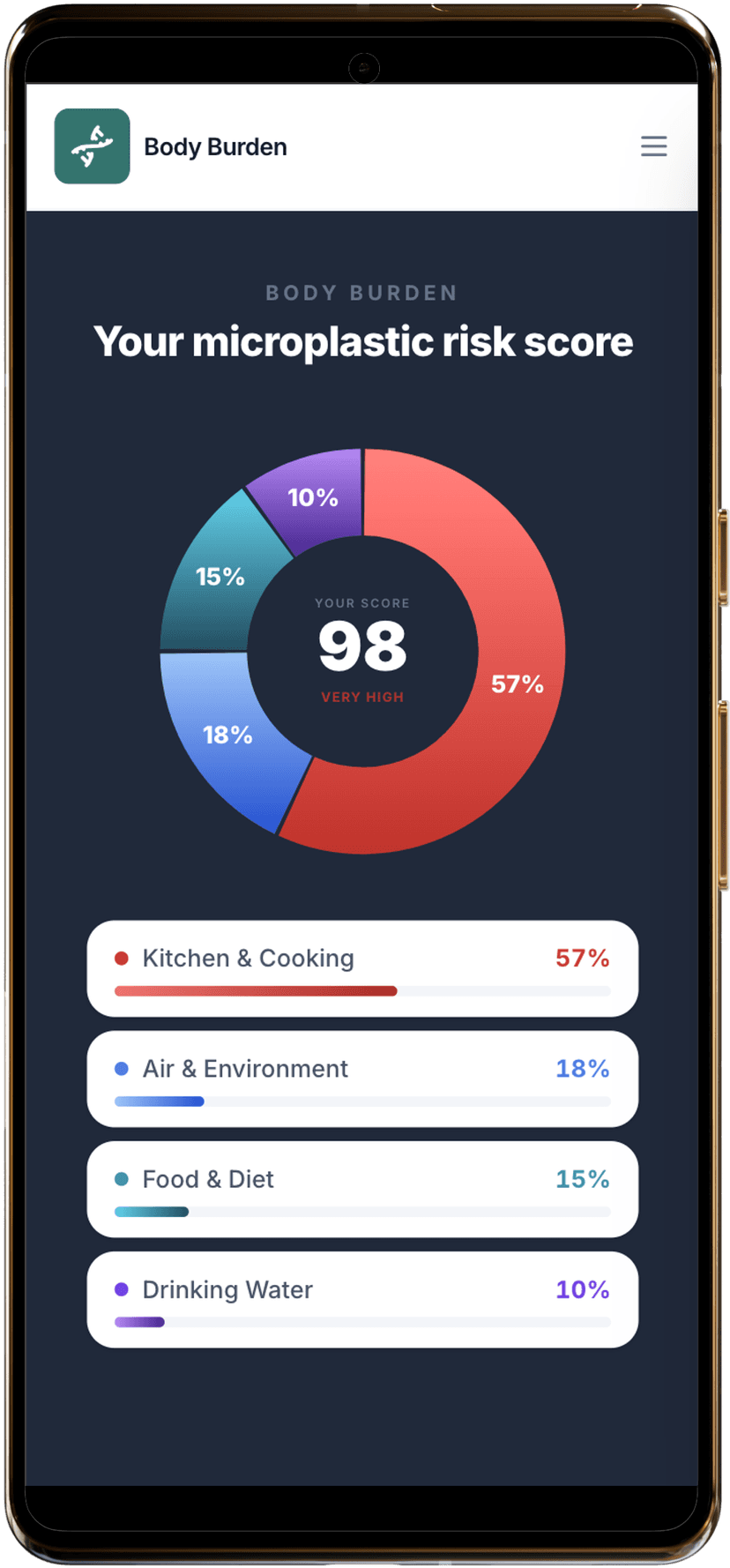
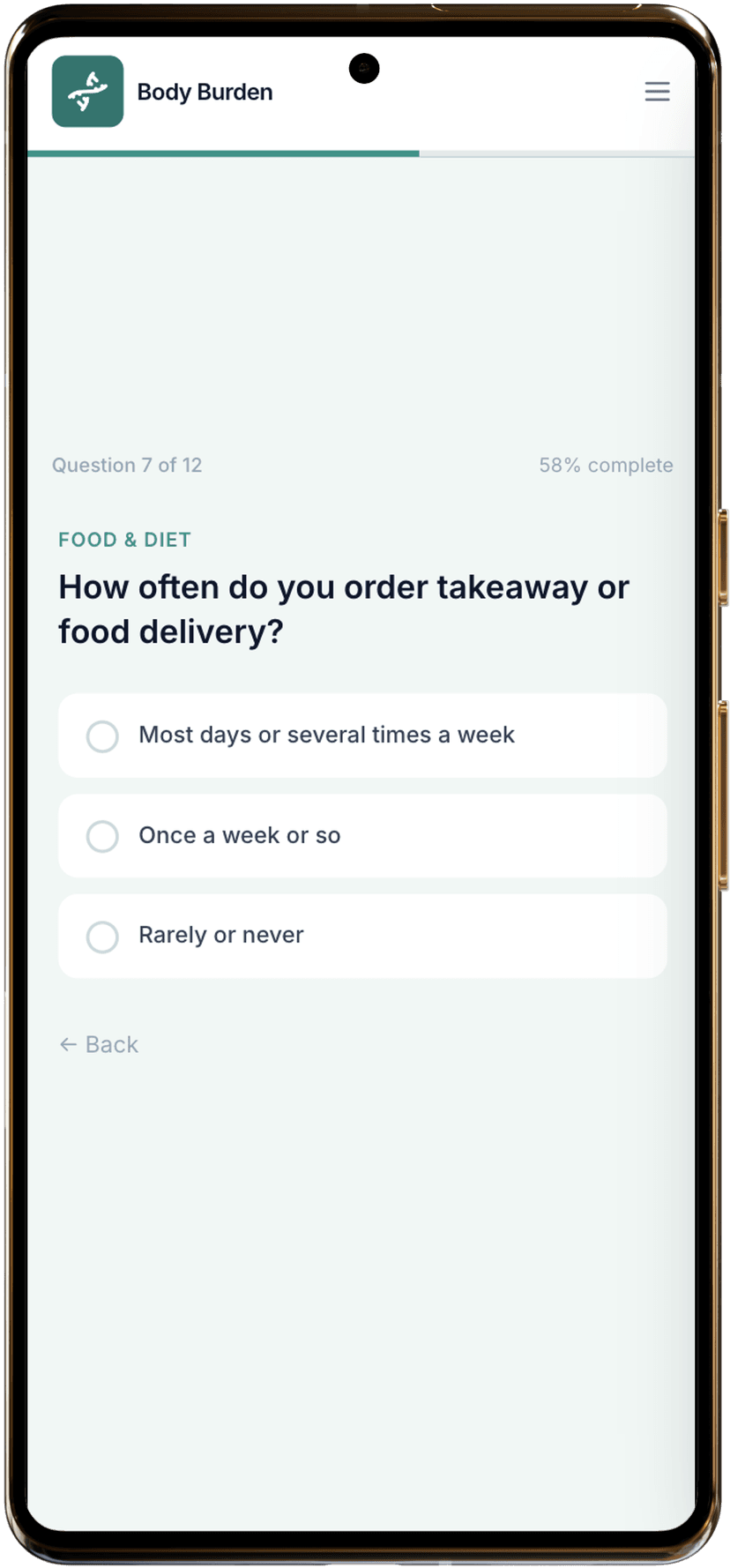
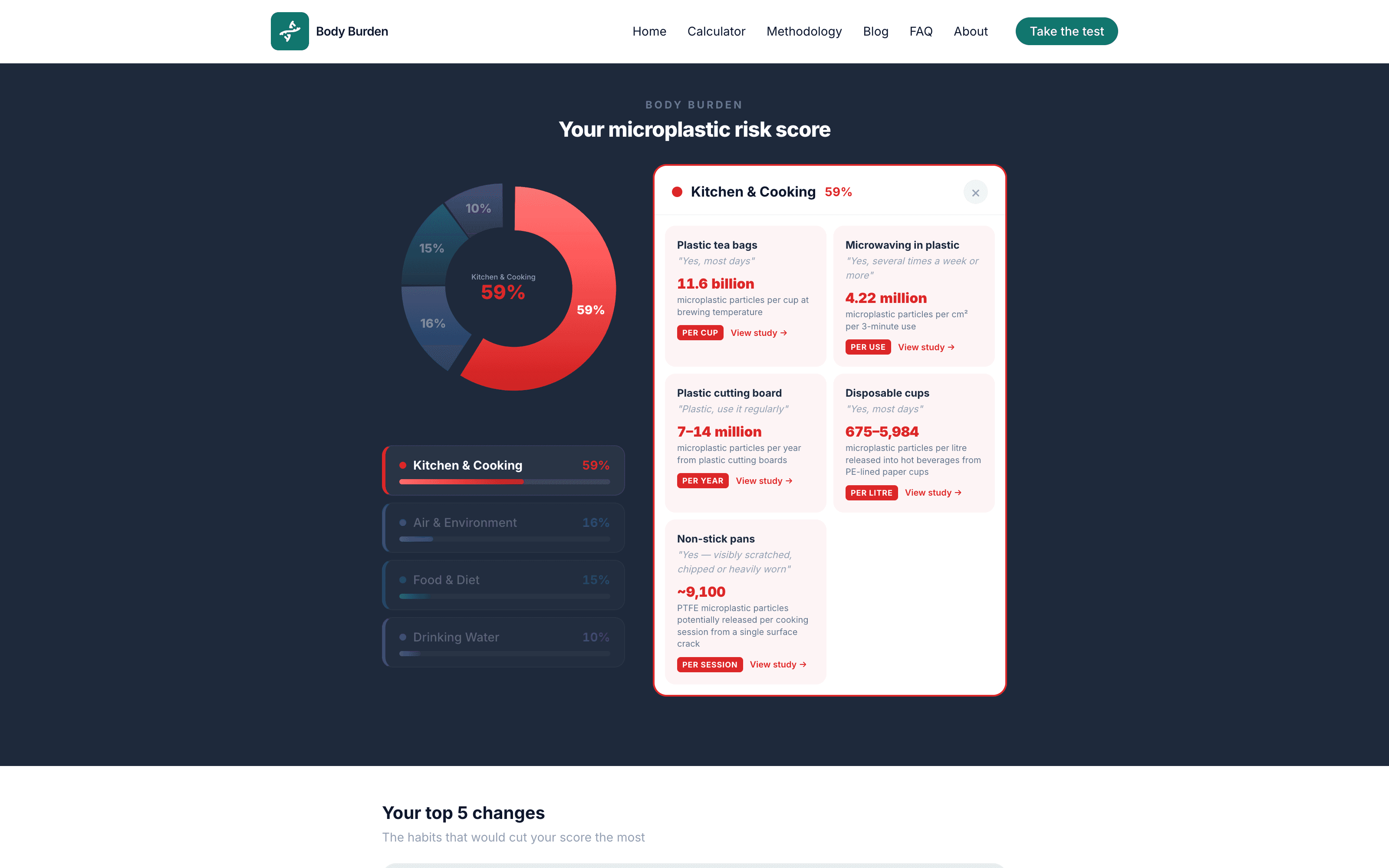
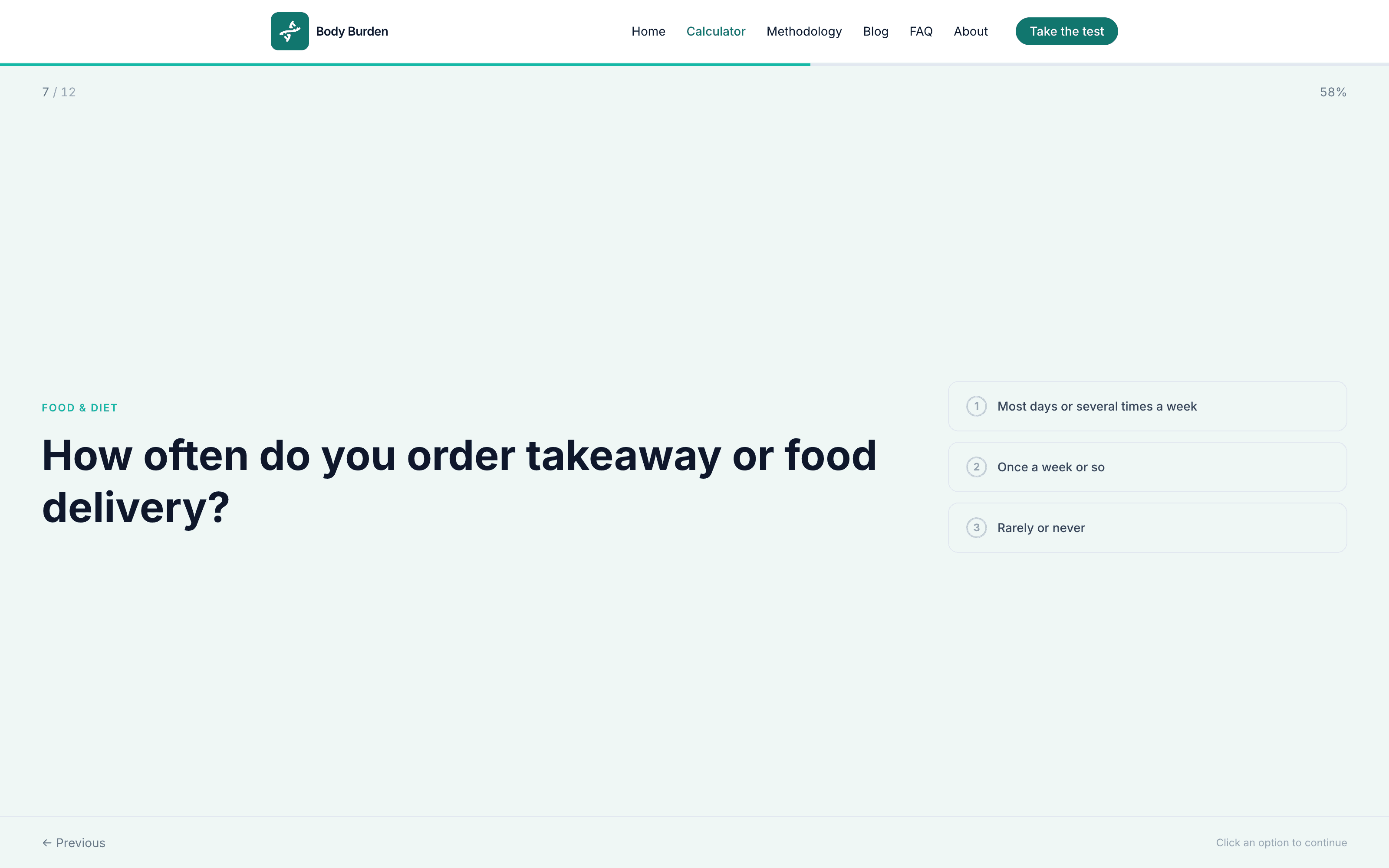
I restructured the calculator around independent exposure categories — Kitchen & Cooking, Food & Diet, Drinking Water, Air & Environment — each scored using methodology-appropriate studies, instead of one misleading total.
It is a cute tool but it carries the illusion of a scientific accuracy which it doesn't (and cannot) offer.
— microplastics researcher
● ● ● ● The Detail That Shows the Thinking
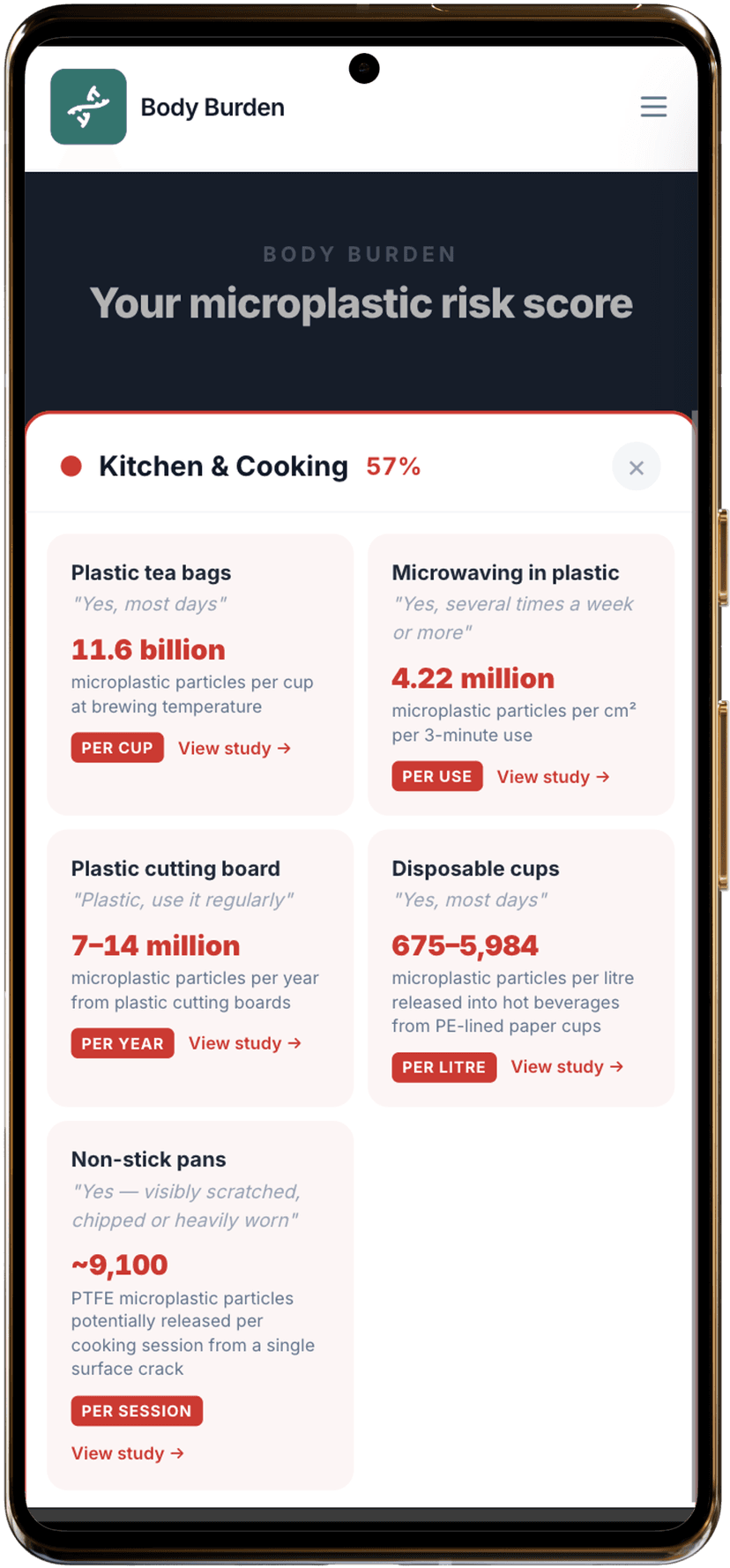
Every exposure card displays a different unit — per use, per cup, per year, per session. This isn't inconsistency, it's the scientific constraint made visible. The studies measure exposure differently by definition, so combining them into a single number would be meaningless. The design makes that honest without ever explaining it to the user.
● ● ● ● Outcome
Launched April 2026. Cited by youthclimateleader.org as a student resource, and requested as a source by a PhD student for her thesis on microplastics exposure.